
"Texas A&M coffee research"
30 article(s) found

Elimination of coffee leaf rust in Latin America
The US government plans to join hands with Texas researchers to step up the fight against fungi that have caused 1 billion dollars in damage to coffee trees in Latin America and the Caribbean and curb high coffee prices.
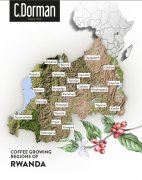
Rwanda Pearl Project| How to drink coffee beans in Rwanda and the development history of its coffee industry
Rwanda Pearl Project| Rwanda's weight in the traditional coffee world is not as good as Kenya and Ethiopia, but in recent years its growing reputation has attracted the attention of international boutique coffee. Rwanda's coffee industry has a story, which is inseparable from government support. Rwandans have been living in Rwanda
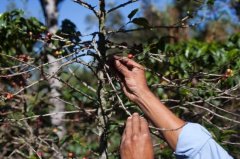
The US government has funded research on how to eliminate the deadly fungus of coffee beans.
Coffee is sick, too. The US government is stepping up efforts to help Central American farmers fight a devastating coffee disease in an effort to stem the rise in coffee prices, Hong Kong's East net reported on May 19. It is reported that the fungus, known as coffee rust, has caused more than $1 billion (6.23 billion yuan) in damage in Latin America. This fungus is used to make high-end and specialty coffee.

Coffee Research the latest study shows that coffee can reduce depression in women
Women who drink coffee every day are less likely to develop depression than those who don't, according to a new study. The researchers followed more than 50,000 women over a 10-year period and found that women who drank at least four cups of coffee a day had a 20 per cent lower risk of depression and 15 per cent less than those who drank two or three cups a day. Of these 50739 women,

The World Coffee Research Association publishes the Compendium of Coffee species
The World Coffee Research Association (World Coffee Research), hereinafter referred to as WCR, issued the Coffee Tree species of Central America and the Caribbean, an unprecedented Arabica tree species compendium. You can download it from the following website: https://varieties.worldcoffeeresearch.org this compendium was written by WCR and designated partner Coffee Farm. Can be on the net
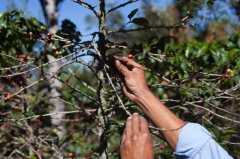
The US government is anxious to allocate funds to help Central American farmers fight against it.
Guatemalan farmers show coffee beans damaged by fungi. Coffee is also "sick".
Flavor characteristics of Rwandan coffee beans "the country of a thousand hills" the story characteristics of Rwandan coffee beans
For more information on coffee beans, please follow Coffee Workshop (Wechat official account cafe_style) Rwanda Coffee, the most popular African coffee after Kenya and Ethiopia. But unlike the two famous producing countries, it does not have a long history of planting, let alone native varieties everywhere in the wild. This small African country is a fire Phoenix that has been reborn after robbery.

The main varieties of coffee are Arabica and Robusta Arabica coffee tree Robusta coffee
Extreme weather can do a lot of damage to crops, especially coffee, coffee researchers say: coffee is a canary in coal mines under climate change. This means that coffee crops are the most sensitive to climate change, where a slightly unusual climate can affect the harvest of coffee beans; coffee trees, especially Arabica varieties, are extremely vulnerable to all symptoms of global warming. Leaf rust pounce

Flavor characteristics of Starbucks Rwanda Coffee Bean Story processing method of Rwanda Gesak coffee bean
For the exchange of professional baristas, please follow the coffee workshop (official Wechat account cafe_style). The Monchee Hamuyi processing plant in the western province of Rwanda has worked together to batch the sunburn bourbon species Rwanda West Province Mashesha CWS Bourbon Natural countries: Rwanda Rwanda production area: the western province West Province processing plant: Monseha processing plant Mashesha CWS, Mushuyi

With reduced production and higher prices, climate change may lead to no coffee to drink in the future?
Communication of professional baristas Please pay attention to the coffee workshop (official Wechat account cafe_style) Central America is too humid and Brazil is too dry to teach coffee what to do. In Guatemala and throughout Central America, coffee production has been greatly reduced by infection with a fungus called coffee rust. Along the equator, which is most suitable for coffee growth, the problem of yield reduction is mostly due to extreme rainfall. PHOT

How many flavors are there in the coffee flavor wheel? can you imagine the reason why the 2014 coffee flavor wheel revised the latest version?
Professional coffee knowledge exchange more coffee bean information please follow the coffee workshop (Wechat official account cafe_style) Front Street-Coffee Flavor Wheel Coffee Flavor Wheel as the coffee industry's first reference for coffee flavor and flavor, it has a far-reaching impact on the entire coffee industry, especially for the definition of boutique coffee and good coffee is a guide, guiding the direction of development of the industry. 2014

Introduction to the flavor and taste of Rwanda boutique coffee Malaba coffee
After the washed coffee beans are air-dried on the net rack, after washing the coffee beans many times to completely remove the remaining skin and sugary outer layer, the coffee beans are put into the sheltered rack to air-dry. Cooperative staff regularly flip coffee beans, while technicians continue to look for and pick out poor quality coffee beans. The two-week drying process takes place in the sun (preparing mulch in case of rain), but not

What is the design principle of coffee flavor wheel? Get to know the new coffee flavor wheel
I guess you have more or less seen the following main picture, which is the old Coffee tasters flavor wheel coffee flavor wheel, proposed by SCAA in 1995. Later, it was jointly designed by SCA (Speciality Coffee Association,SCAA and SCAE were formally merged into SCA in 2017) and WCR (World Coffee Research), and proposed in 2016.

Fine coffee with soft, fragrant and full-grained flavor in Rwanda Coffee Manor.
Coexist. The primary school has an 8-year system and the middle school has a 6-year system. Education accounts for about 20% of the state budget every year. The illiteracy rate is 49%. In 1991, there were 11789 public primary schools, 900000 primary school students, 16,394 primary school teachers, 77 public middle schools, 16 private middle schools, 20,789 middle school students and 1,469 middle school teachers. There are 323 comprehensive rural handicraft centers with 32,660 students.
Rwandan coffee is the best coffee in Rwanda.
Rwandans have been growing coffee since colonial times, but until 1999, the product was classified as below grade C and was not available on the global market. The reason for the poor quality is that farmers do not have a fixed procedure for cleaning coffee beans, and they do not process coffee fruits according to specifications in time. Buyers pay $0.33 a kilo for coffee beans, farmers keep warm on meager profits from low prices
Boutique Coffee Rwanda Coffee Manor 1756 members small farmers
Rwandans have been growing coffee since colonial times, but until 1999, its products were still classified as below Class C and were not popular in the global market. The reason for the poor quality is that farmers do not have a fixed procedure for washing coffee beans and do not process coffee fruits according to specifications in time. Buyers buy coffee beans at $0.33 per kilogram, and farmers keep warm by the meagre profits earned at low prices.

Boutique coffee Rwanda coffee flavor red apple, cherry, cinnamon, honey
Rwandans have been growing coffee since colonial times, but until 1999, its products were still classified as below Class C and were not popular in the global market. The reason for the poor quality is that farmers do not have a fixed procedure for washing coffee beans and do not process coffee fruits according to specifications in time. Buyers buy coffee beans at $0.33 per kilogram, and farmers keep warm by the meagre profits earned at low prices.

Fine coffee Rwanda coffee producing area Western Province Lutexiluo producing area
Rwandans have been growing coffee since colonial times, but until 1999, the product was classified as below grade C and was not available on the global market. The reason for the poor quality is that farmers do not have a fixed procedure for cleaning coffee beans, and they do not process coffee fruits according to specifications in time. Buyers pay $0.33 a kilo for coffee beans, farmers keep warm on meager profits from low prices

Fine coffee Rwanda coffee treatment method washing, elevated scaffolding sun drying
Rwandans have been growing coffee since colonial times, but until 1999, its products were still classified as below Class C and were not popular in the global market. The reason for the poor quality is that farmers do not have a fixed procedure for washing coffee beans and do not process coffee fruits according to specifications in time. Buyers buy coffee beans at $0.33 per kilogram, and farmers keep warm by the meagre profits earned at low prices.

Columbia Coffee rating event Excellence Cup Competition
Champion coffee bean grower Arnolfle Gizamo. Coffee growers are waiting for the award. Tasters use their sense of smell to distinguish the aroma of coffee. Colombia's coffee is among the best in the world, and the annual coffee rating event, C O E, is dedicated to judging the best coffee here. The judges all have special skills to influence the future of the coffee industry between sipping and spitting. Positive value